Why did the quote for flood coverage come back higher on the house three streets closer to Surfside Drive, even though it listed for less than the one near Deerfield?
That question comes up more than any other when buyers start comparing homes in Surfside Beach, and the listing sheet never answers it. Square footage, bedroom count, year built, none of those numbers explain the gap. The line that actually explains it runs through the town on a FEMA flood map, not through the MLS, and it cuts across neighborhoods without regard to price bracket, HOA amenities, or how close a house sits to the pier.
Two homes priced within a few thousand dollars of each other can sit on opposite sides of that line. One might fall in a Special Flood Hazard Area that requires flood insurance as a condition of financing. The other might sit just far enough back, in an X zone, where a lender may not require coverage at all. The list price never tells you which side you're on. The insurance quote does, and by the time it arrives, most buyers are already deep into a contract.
Where the Line Actually Runs
Surfside Beach's oceanfront blocks sit in the same high-hazard wave-action zones (VE) that run along the rest of the northern Grand Strand's beachfront. A few streets back, the designation typically drops to AE, and further inland it often becomes X, where insurance isn't legally required for most conventional loans. The distance between those three zones in Surfside Beach can be a matter of a few blocks, not a few miles.
That matters because the town's larger subdivisions don't sit neatly inside one zone. Deerfield, one of the largest communities in Surfside Beach, spans a mix of homes, townhomes, and condos across enough ground that a buyer looking at two Deerfield listings can be looking at two different flood designations without realizing it. Oceanside Village and Ocean Lakes sit closer to the coast, appealing to second-home buyers and investors who accept the trade-off of higher flood exposure for shorter walks to the beach. Communities set back further, including Surfside Beach Club and Belle Harbor, tend to carry a different risk profile simply by virtue of where they were platted.
None of this shows up on a home's flyer. It shows up on the Elevation Certificate, a document the Town of Surfside Beach's Planning, Building and Zoning Department keeps on file for many properties and can help you request before you ever write an offer.
The Rule Surfside Added on Top of FEMA's
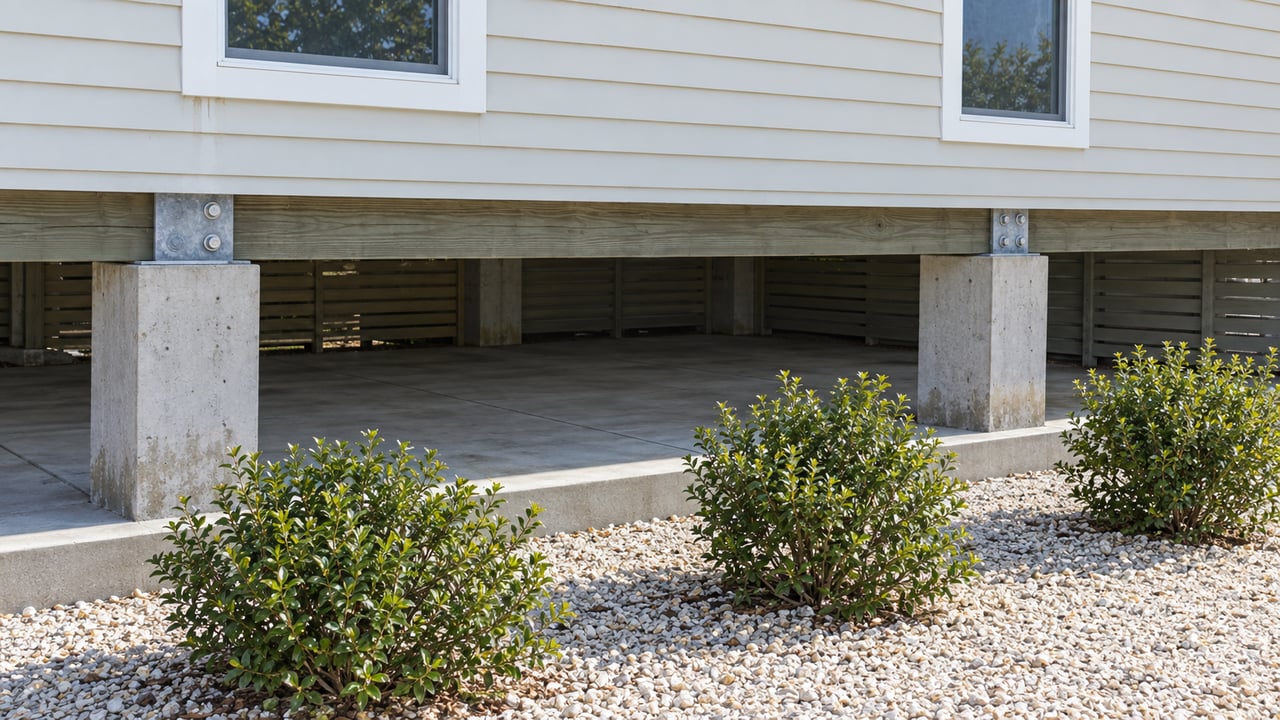
FEMA sets a minimum elevation standard for construction in flood zones. Surfside Beach's own Flood Damage Prevention Ordinance goes further, requiring new construction, substantial improvements, and additions, both residential and non-residential, to be built to the Base Flood Elevation plus three additional feet of freeboard. That's a local decision stacked on top of the federal floor, and it changes what elevating or rebuilding a home in this town actually costs.
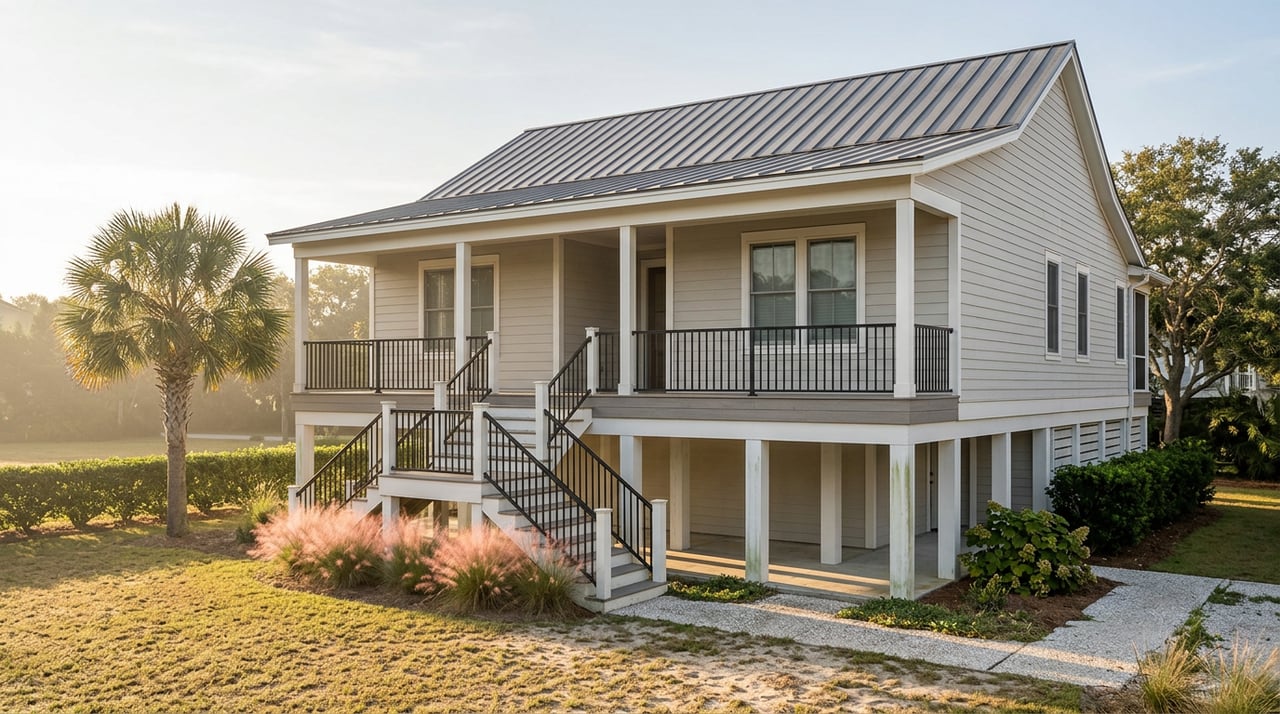
It also changes what a renovation can turn into. Under the same flood ordinance framework that governs coastal South Carolina, if the cost of a renovation exceeds 50 percent of a building's market value, excluding the land, the entire structure has to be brought up to current flood zone construction standards. A kitchen remodel that crosses that threshold can become a full foundation elevation project, with all the piling work that implies.
And the piling work is not trivial here. In the sandy, unstable soils common to Surfside Beach and Garden City, pilings often need to be driven 15 to 25 feet deep to reach stable bearing capacity, compared with 8 to 12 feet in more stable soils farther inland. A buyer planning to renovate a raised beach house near the water is planning around a foundation cost that a buyer doing the same renovation a half mile inland simply doesn't face.
The CRS Discount Helps, But It's Not the Whole Story
Surfside Beach participates in FEMA's Community Rating System, a voluntary program that rewards towns for floodplain management activities with a discount on NFIP flood insurance premiums. The town is currently rated CRS Class 7, which earns residents a 15 percent discount on their NFIP premiums. The CRS scale runs from Class 1 to Class 10, with discounts ranging from 5 percent up to 40 percent depending on the class a community earns, so a lower class number buys a deeper discount.
Not every Grand Strand town holds the same class. Reporting from The Sun News earlier this year noted that Surfside Beach's score is 7 while Pawleys Island holds a 5, a better rating that implies a larger discount, and Port Royal sits at a 9, which qualifies for only a 5 percent break. The same article followed a Pawleys Island homeowner who had been required to shop the private flood insurance market because of the type of loan he held, and who later refinanced in part to adjust for rising insurance costs he hadn't fully planned for when he bought.
That detail matters for Surfside Beach buyers too, because the CRS discount only applies to NFIP-backed policies. It does not apply to private flood insurance, and higher-value homes or those with a history of repetitive flooding are often steered toward the private market regardless of what class the town holds. A 15 percent discount is real, but it's a discount on one kind of policy, not a guarantee of what any given buyer will actually pay.
What This Means If You're Comparing Two Houses Right Now
Surfside Beach Club offers a useful contrast because its comparables behave more predictably than most of the rest of the town's market. Every home in the community, the sixteen that closed between September 2025 and September 2026 and the seven currently listed, is a detached single-family house on its own lot, built between 2006 and 2016. There are no condos or townhomes mixed into the comps, and no pre-code construction dragging the range in unpredictable directions.
Those sixteen closings ranged from $290,000 to $682,499, averaging $470,649 on 2,047 square feet, or about $232 a square foot, with sellers holding onto 97.6 percent of their final asking price. The seven homes currently on the market are asking between $439,900 and $634,900, averaging $521,642, which sits well above what the last sixteen sellers actually got. That gap is normal in a market where asking prices tend to run ahead of what closes, but it's also a reminder that even a clean, uniform comp set has limits on what a seller can actually collect.
That kind of uniformity doesn't happen by accident in a town where the flood line is usually what breaks a comp set apart. A single build era on a single lot type means the insurance and construction-compliance variables that create surprises elsewhere in Surfside Beach are largely already baked in and consistent here. Older neighborhoods, or ones that span a wider mix of construction dates and elevations, don't offer that same consistency, which is exactly why the Elevation Certificate matters more in those comparisons than the square footage does.
Before writing an offer on a Surfside Beach home outside a tightly built community like this one, it's worth asking the seller's agent whether an Elevation Certificate already exists for the property. The Town's Planning, Building and Zoning Department keeps copies on file for many addresses and can tell you which flood zone a property sits in before you're deep into due diligence. Finding out during underwriting, after you've already waived contingencies, is the expensive way to learn it.
Direct Answers for Buyers Comparing Two Houses
Does every home in Surfside Beach need flood insurance? No. Federal law requires flood insurance for federally backed financing only on properties in a Special Flood Hazard Area, which covers all A-zones. Homes in X zones aren't required to carry it, though some lenders ask for it anyway in the Shaded X areas that fall within the 500-year floodplain.
Can I find out a property's flood zone before I make an offer? Yes. The Town of Surfside Beach's Planning, Building and Zoning office can confirm a property's designation and, in many cases, provide a copy of an existing Elevation Certificate.
Does Surfside Beach's 15 percent CRS discount apply no matter which insurer I use? No. The discount applies only to NFIP-backed policies. Homes that end up in the private flood insurance market, often higher-value properties or those with a flooding history, don't receive it.
Does a house have to be oceanfront to carry flood insurance costs worth planning for? No. Zone boundaries can put a house several blocks from the water in the same insurance category as one much closer to it, depending on elevation and how the FIRM lines were drawn.
If you're comparing two Surfside Beach houses and the numbers on paper look close enough to call it a coin flip, the flood zone is usually the tiebreaker. The Brian Piercy Group can help you get the Elevation Certificate and zone history pulled before you write the offer, not after.