Pull up three different listing sites for Garden City Beach this month and you'll get three different answers to a question that should have one number. As of August 20, 2026, the median condo listing price on one national portal sits at $230,000. Another site pegged the median home price at $652,250 back in April. A third put the median list price for homes at $944,000 that same month. These aren't typos or stale caches. They're measuring three different slices of a market that only looks like one place on a map.
If you're comparing Garden City Beach against other Grand Strand towns while shopping from out of state, that spread matters more than any single figure. It tells you the real question isn't "what's the median price here?" It's "which Garden City am I even looking at?"
The Split Is Age and Elevation, Not Zip Code
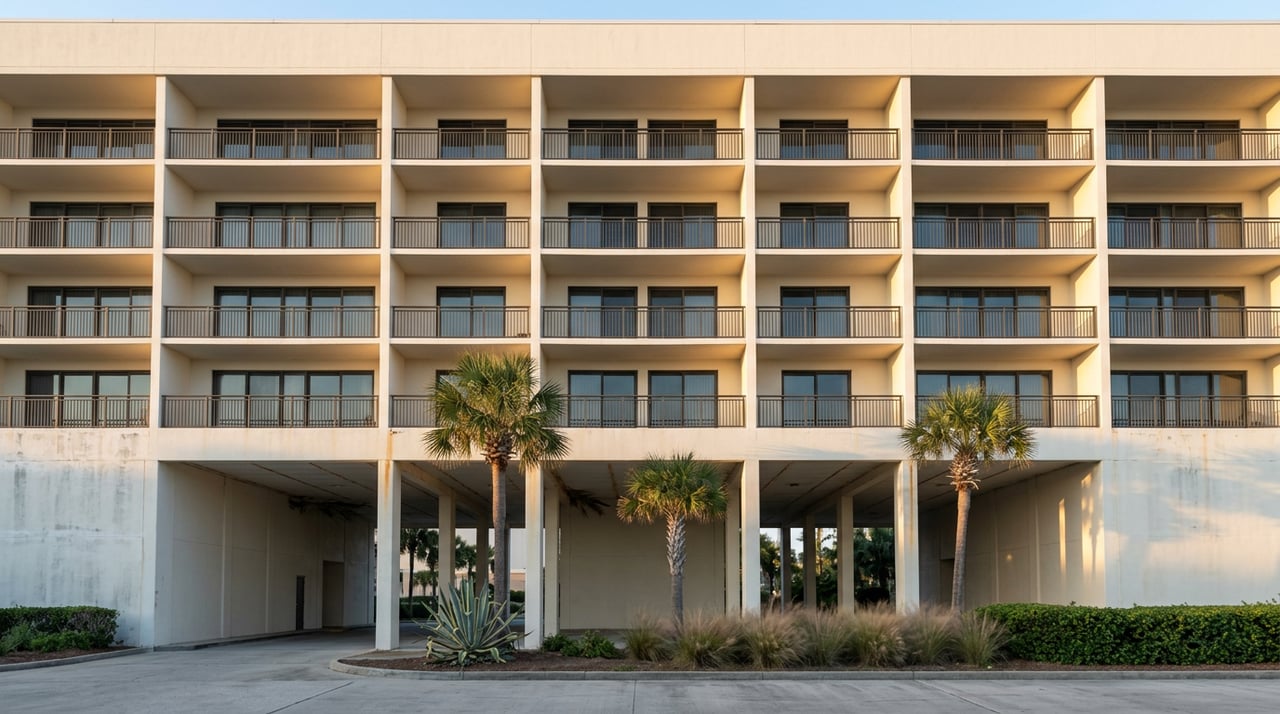
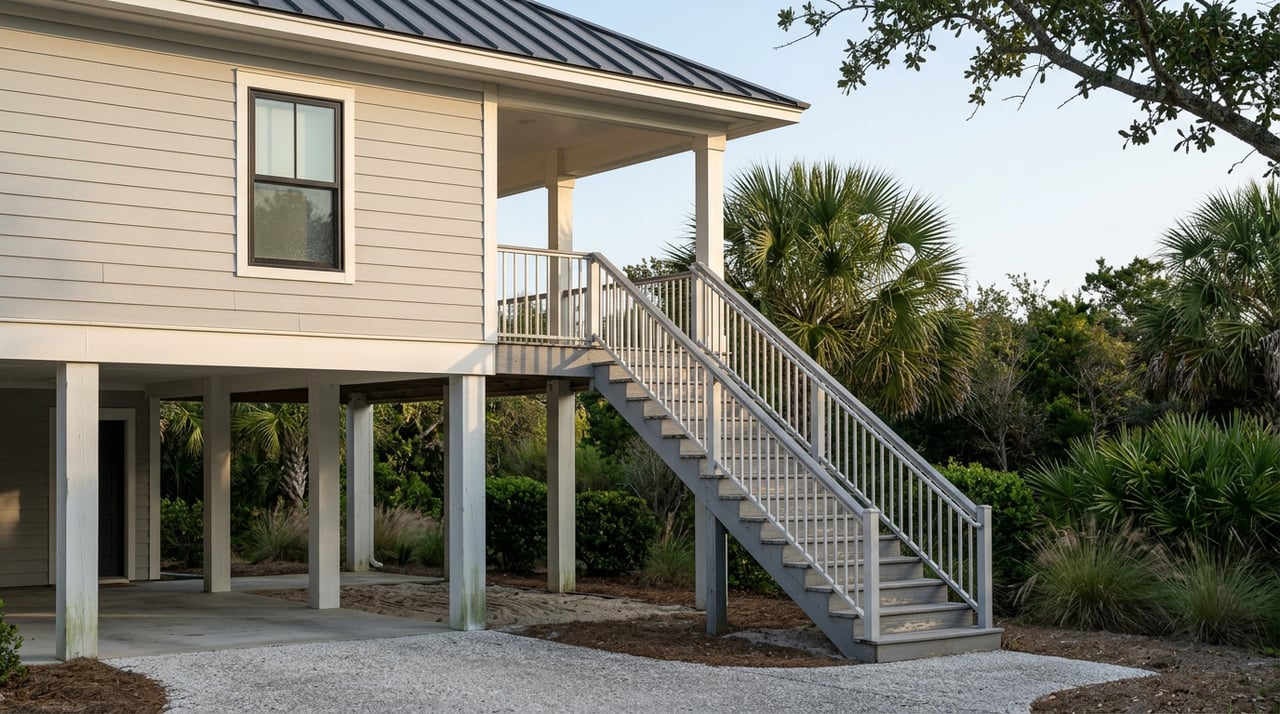
Garden City Beach doesn't have neighborhoods in the traditional sense so much as it has two very different building stocks sharing a few square miles of peninsula. On one side you've got inland and canal-front communities like North Garden City, International Club, and Tupelo Bay Golf Villas, where single-family and townhome product can start in the low six figures. On the other side, oceanfront towers along Waccamaw Drive, buildings like Atalaya Towers, Royal Garden Resort, Surfmaster, Sandy Shores, and Carolina Shores II, sit a few hundred feet from the Atlantic and price accordingly.
A listing search this year turned up oceanfront condos with a median asking price around $320,000, while the broader condo market (inland and near-beach combined) showed a median closer to $230,000. Single-family homes ranged from the low hundreds into the multiple millions depending on lot, elevation, and proximity to the water. That's not a market with outliers. That's two markets that happen to share a mailing address.
The practical upshot: a "median price" for Garden City Beach is close to meaningless unless you know which slice it's drawn from. A buyer comparing a $600,000 figure they saw on one site against a $230,000 figure on another isn't looking at appreciation or a market correction. They're looking at two different populations of properties.
What Actually Changes the Monthly Number
Here's the part that doesn't show up on any listing page: two units at the identical purchase price can carry wildly different true costs of ownership, and the gap usually isn't the mortgage.
Regime fees, South Carolina's term for condo HOA dues, are driven by building age, elevator count, amenity load, and how well the association has funded its reserves. Coastal buildings carry an added expense inland condos don't: wind and hail coverage, which many associations obtain through the South Carolina Wind and Hail Underwriting Association, the state's insurer of last resort for high-risk coastal property. That coverage typically carries a deductible calculated as a percentage of the insured value, commonly 2 to 5 percent, rather than a flat dollar figure. On a $2 million building policy, a 3 percent wind deductible is $60,000 out of association reserves before insurance pays a dollar.
This isn't theoretical. A homeowners association just up the coast in North Myrtle Beach lived through a version of it a few years back: the board budgeted $156,000 for its annual property insurance, then watched its carrier exit the market before renewal. A replacement offer came through three days before the old policy expired, at roughly four times the original budget. By the time the bills were final, the community's insurance cost had climbed past $600,000, forcing a dues increase on every owner in the building.
"It scares me when it goes up because we did have an increase and we had to do a special assessment."
That's a South Carolina homeowner describing the moment to a Carolinas TV station this past July, in a story about a statewide insurance report. The line captures something a spreadsheet can't: the psychological whiplash of watching a fixed monthly cost turn into an unplannable one.
The Wind and Hail Underwriting Association itself filed for a 7.5 percent rate increase on dwelling policies, effective February 1, 2026. That's a baseline increase, before any building-specific factors like age, roof condition, or claims history push a premium higher.
The Ten-Year Number Nobody Puts in a Listing
A report from the Coalition for an Insurable Future and Mandala Partners, covered by Myrtle Beach Online this past July, projects South Carolina homeowners could see insurance premiums rise between 60 and 203 percent over the next decade, depending on region and climate scenario. The county-level projection for Horry County, which anchors most of the northern Grand Strand, comes in at roughly 90 percent, or about $2,400. That figure isn't a Garden City-specific number, but it's the closest regional read available, and it reflects the same insurance climate reshaping every listing on this stretch of coast.
You can already see a version of that climate playing out within Horry County itself. NerdWallet's 2026 city-level analysis put average annual homeowners insurance in Conway, about twenty minutes inland, at $4,275. A separate industry analysis this month put the average Myrtle Beach homeowner closer to $445 a month, north of $5,300 a year. Same county, same general hurricane exposure on paper, but a meaningful gap in what insurers actually charge once you're within sight of the water. That inland-versus-oceanfront math is exactly what plays out inside Garden City Beach itself, just compressed into a few blocks instead of twenty miles.
None of this means oceanfront ownership is a bad decision. It means the sticker price and the true carrying cost are two different numbers, and the gap between them is currently widening faster than it has in years.
Four Documents Before You Write an Offer
If you're comparing two Garden City units at similar list prices, ask for these before you get emotionally attached to either one:
- The reserve study. This tells you whether the association has actually saved for major repairs, or whether a special assessment is a matter of when, not if.
- The current insurance declarations page. Confirm what the master policy covers, what the wind and hail deductible is in dollar terms (not just percentage), and when the policy renews.
- The last 12 to 24 months of HOA meeting minutes. Insurance shopping difficulties, deferred maintenance debates, and assessment discussions show up here long before they show up in a listing description.
- The resale certificate. In South Carolina this document discloses pending litigation, unpaid dues, and known upcoming assessments tied to the specific unit.
A seller or listing agent should be able to produce all four without friction. Reluctance to share them is itself useful information.
Where the Math Still Works
None of this is an argument against buying in Garden City Beach. It's an argument for pricing the whole picture, not just the number in the listing headline. Inland and golf-adjacent communities like North Garden City and International Club tend to carry lower regime fees and less insurance exposure, which can make them a steadier hold for a primary residence or a long-term rental play. Oceanfront towers along Waccamaw Drive carry higher fixed costs, but they also command the rental premiums that make short-term rental math work for owners who've budgeted realistically for the insurance side of the ledger, not just the mortgage side.
Garden City's own history is a reminder that this coast has always required that kind of planning. The current Garden City Pier isn't the original. Hurricane Hugo destroyed the first structure in 1989, and it took until 1992 for a rebuilt pier to fully reopen. The town has spent decades absorbing storms and rebuilding stronger. The insurance market catching up to that reality isn't a reason to avoid the coast. It's a reason to buy with your eyes open.
A Few Questions Buyers Ask Before Making an Offer
Are regime fees negotiable during a purchase? No, but they're informative. A fee that seems low relative to a building's age and amenities is worth investigating rather than celebrating.
Does an inland Garden City property still need flood insurance? It depends on FEMA flood zone designation, not distance from the ocean alone. Some inland and canal-front parcels carry flood zone requirements that surprise buyers who assumed "not oceanfront" meant "not flood zone."
How do I find out if a special assessment is already planned? The reserve study and recent board meeting minutes are the two places this surfaces first, often months before it becomes a line item on a monthly statement.
If you're weighing an oceanfront tower against an inland pocket in Garden City Beach, or trying to figure out what a listing's regime fee actually implies about the building behind it, that's the kind of building-by-building read The Brian Piercy Group does before you ever write an offer. Start with a real look at what a specific property will actually cost to own, not just to buy, with an instant home valuation.